
Call us now :08071794343
 Send Inquiry
 Send Inquiry
Heavy Duty Industrial Gears
Price 170 INR/ Piece
MOQ : 1 Piece
Heavy Duty Industrial Gears Specification
- Gear Type
- Industrial Heavy Duty
- Material
- Alloy Steel
- Processing Type
- Hobbing
- Gear Tooth Profile
- Spur, Helical
- Gearing Arrangement
- Parallel, Right Angle
- Output Torque
- Up to 60000 Nm
- Rated Power
- Up to 500 kW
- Input Speed
- Up to 1800 RPM
- Voltage
- 415V (for motorized units)
- Efficiency
- Up to 98%
Heavy Duty Industrial Gears Trade Information
- Minimum Order Quantity
- 1 Piece
- Supply Ability
- 10 Pieces Per Day
- Delivery Time
- 10-15 Days
Heavy Duty Industrial Gears About
To attain the utmost client satisfaction, we are engaged in manufacturing, supplying and exporting Heavy Duty Industrial Gears. Widely used in engineering industry, these products are manufactured by our experts using high grade and corrosion resistant metals. Owing to our in-house quality testing unit, we are able to check these products on various parameters by latest equipment. Across the world, these Heavy Duty Industrial Gears are acknowledged by the clients for their features such as:
- Precise dimensions
- Sturdy construction
- Easy to install
- Low maintenance
Other details:
We are pioneer manufacturer and exporters of Heavy Duty Industrial Gears, which are known for smooth operation. The size and proportions of the gear tooth are standardized and are fatigue and wear proof. Our gears are made using premium quality materials and are also cost effective. These Heavy Duty Gears offered by us are high on performance with increased corrosion resistance. We offer high precision gears that are renowned for their technical finesse. Produced using latest technology, our precision engineered gears industrial deliver superior performance even in most demanding conditions.
Features of Heavy Duty Industrial Gears
- Simple construction facility
- Provide long service live
- Provide low power consumption
- Power transmissions are reliable and with uniform motions
Robust Alloy Steel Construction
Each gear is meticulously crafted from high-grade alloy steel, providing superior strength, resistance to wear, and extended operational lifespan. This material selection ensures reliable performance under heavy industrial loads, reducing maintenance requirements and downtime.
Versatile Gear Profiles and Arrangements
Our industrial gears feature both spur and helical tooth profiles, allowing for tailored solutions to different application requirements. Gearing can be configured in parallel or right-angle arrangements, optimizing spatial fit and transmission efficiency across machinery setups.
Exceptional Power and Efficiency
Delivering up to 60,000 Nm of torque and 500 kW rated power, these gears are designed for high-output demands. Motorized units operate efficiently at 415V and support input speeds up to 1800 RPM, achieving up to 98% transmission efficiency for optimal operational productivity.
FAQs of Heavy Duty Industrial Gears:
Q: How are heavy duty industrial gears manufactured?
A: Our gears are manufactured using precision hobbing processes and crafted from alloy steel, which ensures high accuracy and durability. The hobbing technique provides excellent tooth geometry and quality, suitable for both spur and helical profiles.Q: What are the main benefits of choosing alloy steel heavy duty gears?
A: Alloy steel offers exceptional strength, improved hardness, and greater resistance to wear or fatigue, making it ideal for heavy industrial applications. This results in longer gear lifespan and reduced maintenance costs.Q: Where can these industrial gears be used?
A: These gears are suitable for industries requiring robust power transmission solutions, such as mining, cement, steel manufacturing, power plants, and material handling equipment, where high torque and reliability are essential.Q: When is the right time to opt for parallel or right-angle gearing arrangements?
A: Parallel arrangements are preferred when shafts need to be aligned, while right-angle configurations are best when space constraints require a perpendicular setup. Selection depends on your machinery layout and design requirements.Q: What processes ensure optimal efficiency in gear operation?
A: Precision hobbing and stringent material selection contribute to gear accuracy and efficiency. Design optimization includes choosing the proper tooth profile, lubricants, and motorized operation at consistent voltages, ensuring up to 98% efficiency.Q: How is the rated power and output torque determined for customized solutions?
A: Rated power (up to 500 kW) and output torque (up to 60,000 Nm) are calculated based on the specific application needs, input speed (up to 1800 RPM), and gear arrangements to deliver reliable and optimal performance in industrial settings.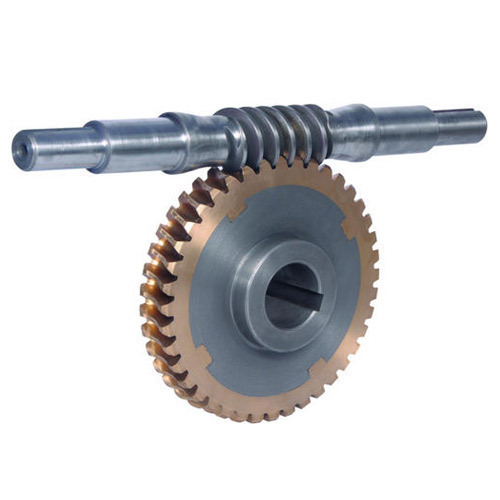
Tell us about your requirement

Price:
Quantity
Select Unit
- 50
- 100
- 200
- 250
- 500
- 1000+
Additional detail
Mobile number
Email


 Send Inquiry
Our Products


Nirankari, Lane No.3, Miller Ganj, Ludhiana - 141003, Punjab, India

Mr. Ramesh Sharma
Mobile :08071794343
 Send Inquiry
 Send SMS
 Call Me Free
Developed and Managed by Infocom Network Private Limited.
